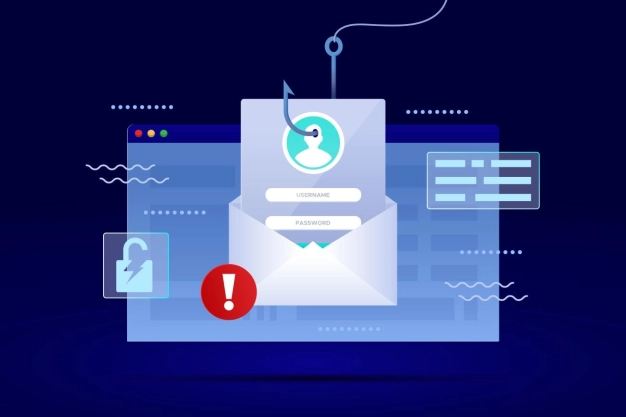
In 2026, website security isn’t optional. It’s part of the same trust layer attackers exploit in email-borne attacks. Phishing campaigns rely on domain lookalikes, malicious landing pages, and compromised web infrastructure to bypass trust and capture credentials.
An aspect that is both basic and often forgotten in digital security planning involves maintaining good visibility and control over the domain footprint of an organization. Domains that have been forgotten, registrations that have lapsed, and DNS configurations left unmanaged often become the primary means by which attackers initiate phishing attacks against our organization.
This guide delivers a pragmatic website security checklist, Linux-first, open-source-anchored, and modern in terms of cybersecurity hygiene; it does not offer casual tips or quick fixes but rather discusses the architectural and operational choices that security teams need to pursue for real risk mitigation.
1. Harden the Linux OS at Kernel Level
Linux distributions, whether it is Ubuntu Server, AlmaLinux, Debian, or Red Hat Enterprise Linux, are what most production web servers run today. Default configurations or poorly hardened operating systems remain an ever-popular attack vector.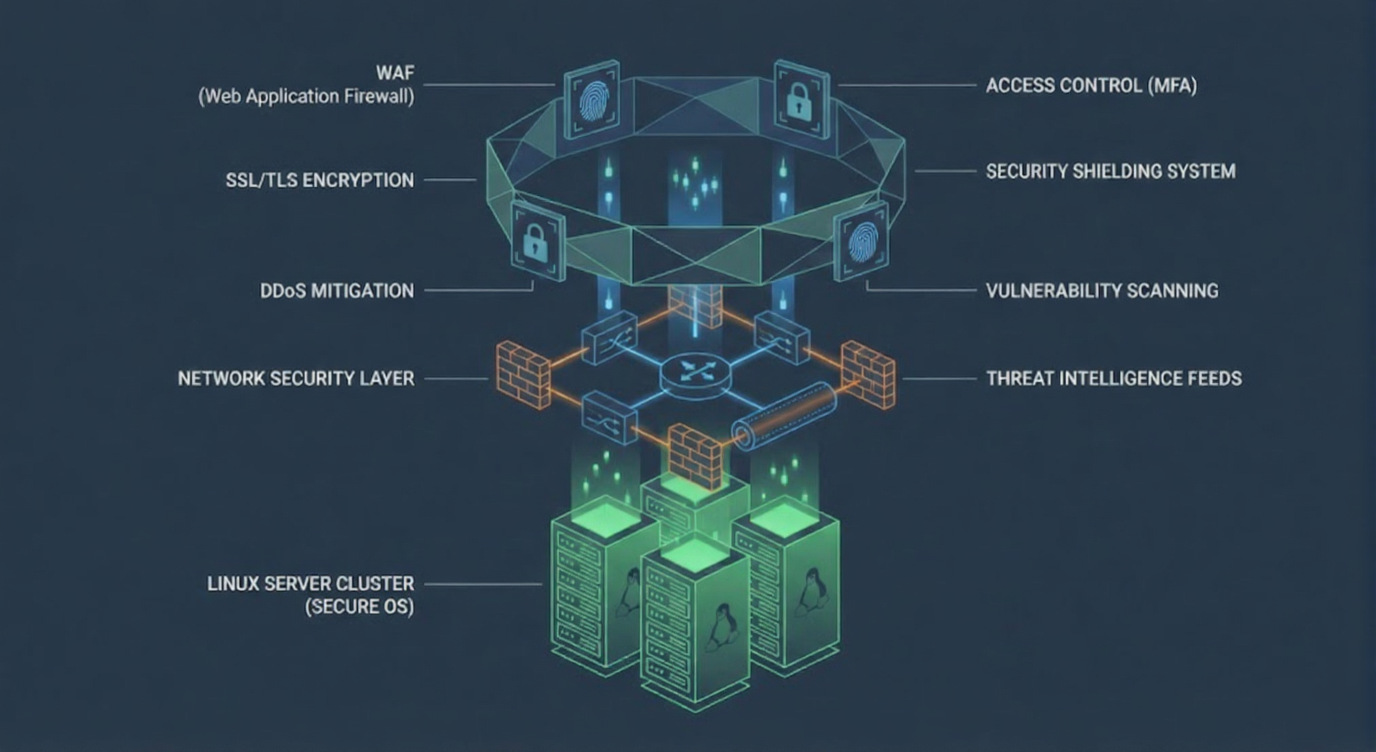
Key kernel-level hardening practices include:
- Disabling unnecessary kernel modules
- Setting sysctl parameters to stop IP spoofing and packet redirects
- Enabling Kernel Address Space Layout Randomization (KASLR)
- Lock down /proc and /sys file systems
Mandatory Access Control (MAC) frameworks such as SELinux or AppArmor should be configured in enforcing mode rather than permissive mode to provide meaningful protection.
2. Secure the Domain and DNS Attack Surface (Rewritten)
Many successful attacks begin at the domain layer, not the application layer. Phishing, DNS hijacking, and impersonation campaigns often succeed because organizations lose visibility over their own domain footprint — especially older domains registered years ago, legacy subdomains left active, or DNS records that no one actively maintains.
That’s why domain inventory management should be treated as core infrastructure hygiene, not an administrative afterthought. Domain inventory management means maintaining a complete, continuously updated record of owned domains and subdomains, including renewal status, DNS record ownership, registrar access, and monitoring for changes or abuse.
Domain and DNS Security Checklist
- Inventory all domains, subdomains, and DNS providers (including legacy and redirected domains)
- Enforce registrar MFA and apply registry lock (where available) for high-value domains
- Enable DNSSEC to reduce the risk of DNS tampering and interception
Automate renewals and expiration alerting to prevent accidental domain loss - Monitor for lookalike and typosquatting domains to reduce impersonation and phishing exposure
- Monitor DMARC reports to detect spoofing and abuse
- Maintain abuse-response and takedown workflows for lookalike domains
For organizations managing multiple brands, geographic variants, or product naming patterns, using a bulk domain availability tool can help secure predictable domains early and reduce the risk of hostile registrations and typosquatting.
Domain strategy is not marketing — it is attack-surface control. Domain control is also the foundation of email authentication, impersonation resistance, and brand trust signals used by mail providers. A disciplined domain portfolio reduces exposure to brand impersonation and phishing campaigns, which remain among the most reliable social engineering entry points into modern organizations.
3. Enforce Email Authentication and Domain Trust Controls
Most businesses treat email security as a separate system from their website, but both depend on the same domain infrastructure. If your domain can be spoofed, attackers can send an email that looks legitimate to customers, vendors, and your own staff. That makes domain-level email authentication part of basic website security hygiene. It reduces phishing success rates, limits impersonation, and gives your organization visibility into who is attempting to use your domain.
Email authentication works by publishing and enforcing records in DNS that tell receiving mail systems what is allowed. The primary controls are SPF, DKIM, and DMARC. These controls do not prevent every attack, but they reduce spoofing and improve the signal quality that mail providers use to classify messages. Most organizations fail here by leaving DMARC in monitoring mode indefinitely, never reviewing the reports, and not enforcing policy consistently.
Email Authentication and Domain Trust Checklist
- Define permitted outbound senders (SPF)
- Publish an SPF record that includes only the systems that are allowed to send mail for the domain.
- Avoid overly broad includes and keep the record within DNS lookup limits.
- Maintain separate SPF considerations for third-party senders (marketing platforms, ticketing systems, CRM) to avoid accidental spoofing allowance.
- Sign outbound mail and manage keys (DKIM)
- Enable DKIM signing for every outbound mail stream, including third-party senders.
- Use strong keys and rotate them on a fixed schedule (not “when needed”).
- Confirm alignment so that the domain in the DKIM signature matches the From: domain that users see.
- Enforce and monitor spoofing policy (DMARC)
- Publish a DMARC record and set a policy that progresses toward enforcement.
- Move from p=none (monitoring) to p=quarantine, then to p=reject once legitimate senders are accounted for.
- Review DMARC aggregate reports regularly. Treat spikes in unauthorized sending as an incident signal, not an informational metric.
- Validate domain coverage and subdomain behavior
- Confirm that subdomains inherit the intended policy or explicitly set subdomain policy using sp=.
- Audit “forgotten” subdomains that still have mail enabled, because they are frequently abused for impersonation.
- Harden transport for inbound mail routing (MTA-STS / TLS-RPT where applicable)
- For organizations operating their own mail routing or requiring strict TLS, implement MTA-STS to reduce downgrade and interception risk.
- Enable TLS-RPT to receive reporting on TLS negotiation issues and configuration failures.
- Operational controls (the part most teams skip)
- Document all authorized sending services and assign ownership for maintaining the list.
- Require change control for adding new outbound mail services.
- Run periodic checks to ensure DNS records match the real sending environment.
- Treat misalignment as operational drift and fix it before it becomes a phishing liability.
Email authentication is not a one-time DNS project. It is an ongoing control that needs ownership, monitoring, and policy enforcement. When done properly, it prevents large classes of spoofing attacks and reduces the credibility of impersonation campaigns that rely on your brand trust.
4. Enforce TLS Everywhere — Without Exceptions
Transport Layer Security is mandatory across all modern environments. Despite this, partial or misconfigured encryption remains common.
Current best practices include:
- TLS 1.3 as the default protocol
- Removal of legacy ciphers and deprecated protocols
- Automated certificate rotation using short-lived certificates
- Strict HTTP security headers (HSTS, CSP, Referrer-Policy)
Web servers running NGINX or Apache should regularly audit their TLS configurations using open-source tools such as testssl.sh, ideally integrated into CI/CD pipelines.
Strong TLS reduces interception and downgrade risk, and helps prevent session tampering once users land on your sites.
5. Secure the Open-Source Application Stack
Modern websites depend heavily on open-source content management systems, libraries, frameworks, and APIs. The primary challenge is no longer patch availability—it is visibility into dependency risk.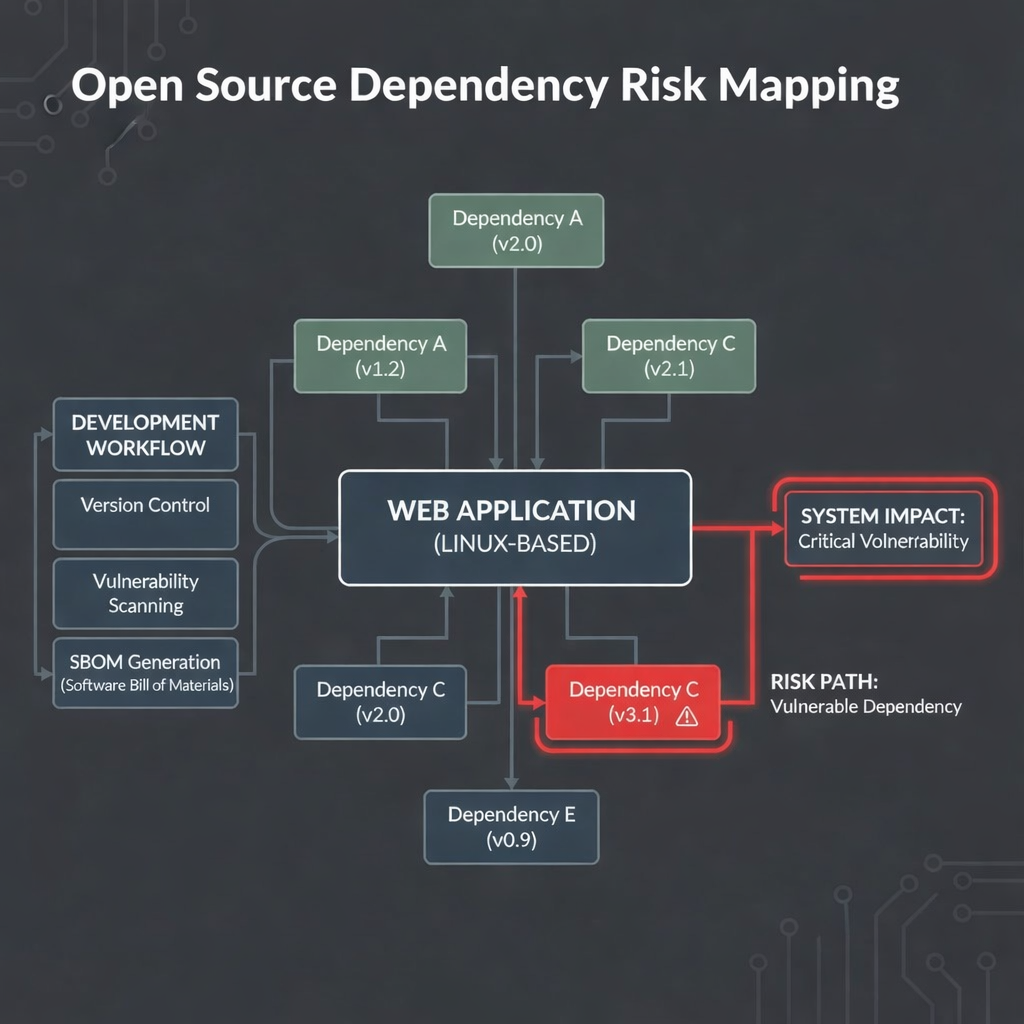
Security teams should implement:
- Software Bill of Materials (SBOM) generation
- Dependency vulnerability scanning
- Version pinning and integrity verification
- Reproducible builds
Blindly updating dependencies without understanding transitive relationships can introduce instability or risk. Research published by LinuxSecurity.com on open-source supply chain threats remains highly relevant in this area.
Compromised websites are frequently used as phishing redirectors or credential-harvesting landing pages, making patch discipline and dependency visibility directly relevant to email-driven attacks.
6. Apply Zero Trust to Infrastructure
Zero Trust is often misunderstood as a networking buzzword. In practice, it requires enforcing strict identity verification at every layer of the stack.
Core principles include:
- No implicit trust between services
- Mutual TLS for service-to-service communication
- Fine access management using Linux namespaces and cgroups
- Least-privilege access enforced at all times
SSH access should be restricted to key-based authentication backed by hardware where possible, with password authentication fully disabled.
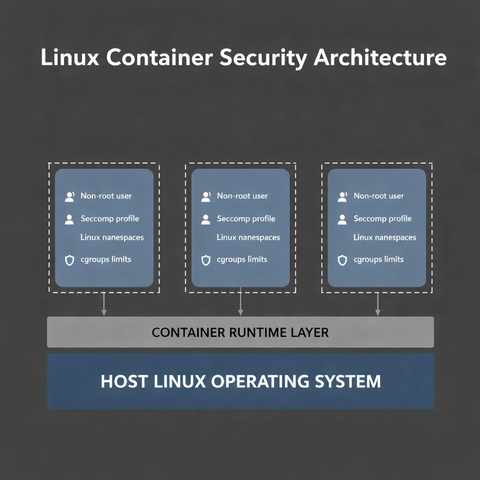
7. Harden Containers and Virtualization Platforms
Containerized workloads improve scalability and deployment speed but introduce new attack surfaces.
For Linux-based container environments:
- Use minimal base images such as distroless or scratch
- Scan container images prior to deployment
- Prevent containers from running as root
- Enforce runtime security policies
Kubernetes environments must treat components such as etcd, admission controllers, and control-plane services as critical security assets rather than background infrastructure.
8. Log, Monitor, and be Ready for Forensics
Security incidents are inevitable. Detection speed and response quality determine impact.
Advanced environments should:
- Centralize logs using open-source SIEM solutions
- Protect logs from tampering using append-only storage
- Monitor system calls and behavioral anomalies
- Keep images of systems ready for forensics
The Linux audit setup known as auditd, along with more watchful eyes from BPF-based tools, is very important in spotting actions after an attack.
9. Often Test, Disrupt, and Check Assumptions
Security checklists fail when treated as static documents. Threat models must be tested continuously.
Organizations should:
- Perform regular internal penetration testing
- Simulate misconfigurations and insider threats
- Validate backups through restoration drills
- Reassess trust boundaries and assumptions
This demands a shift from a solely prevention-based approach to one that incorporates resilience into the security strategy.
Email-Driven Attack Chain Controls (Website + Domain)
Many high-impact attacks still arrive through email, but succeed because the website and domain layer provide trust signals, redirect infrastructure, or spoofable branding. These controls reduce the likelihood that your domains and web properties become part of someone else’s phishing chain.
- Prevent domain impersonation: enforce SPF/DKIM/DMARC and review reports regularly.
- Reduce typosquatting exposure: monitor lookalikes and register key variants where risk warrants.
- Lockdown redirect behavior: audit HTTP redirects and remove open redirect patterns that attackers exploit in phishing links.
- Harden credential flows: ensure login pages use strong TLS, modern headers, and consistent domains (no “legacy” login hostnames).
- Watch for abuse signals: treat spikes in DNS edits, new subdomains, or unexpected cert issuance as investigation triggers.
- Prepare takedown workflows: document how to respond to phishing pages, lookalike domains, and impersonation incidents.
Conclusion
True website security manifests at the meeting point of hardened Linux systems, open-source governance, domain control, and ongoing validation. No single control guarantees protection.
Combining structured infrastructure with disciplined domain and DNS management reduces both technical and social attack vectors. For organizations operating Linux-based systems, this checklist is not an introductory guide—it represents the operational standard required to remain secure.


 PREVIOUS
 NEXT
NEXT 
Other FAQs
- Exploring Malicious Code Risks: Strategies for Email Safety
- Proven Strategies for Effective Malware Removal on Windows Computers
- Why Outsourcing Email Security is Critical for Modern Businesses
- Comprehensive Guide to Safeguarding Against Domain Spoofing Threats
- Effective Strategies to Combat Insider Threats in the Workplace
- Strategies for Email Authentication to Counter CEO Impersonation
- Critical Factors for Selecting Email Security Solutions in Business
- Harnessing Managed Security Services for Enhanced Cybersecurity Vigilance
- Effective Penetration Testing Techniques for Cybersecurity Enhancement
- Managed SIEM Solutions: Boosting Email Security for Small Businesses

Join Our Community
of Readers!