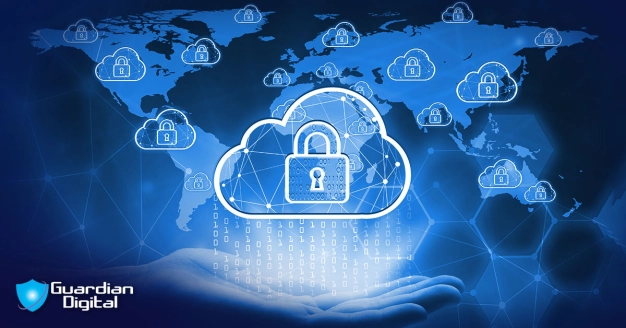
Most teams move deeper into cloud infrastructure because it scales fast, cuts hardware overhead, and keeps workloads reachable from anywhere users actually work. The major CSPs give you the building blocks you expect, like storage and identity services, but the shared responsibility model means you still own the security decisions that sit closest to your data. That’s where data encryption becomes less of a checkbox and more of a guardrail.
If an attacker gets into a bucket, volume, or mailbox snapshot, encrypted content buys you time and dramatically reduces exposure. It also aligns with what regulated industries already expect. Healthcare, finance, and government workflows all lean on strong access controls paired with email security standards, including email encryption, to keep sensitive information from leaking through cloud-hosted systems. The cloud simplifies a lot, but it shifts the weight of protecting that data in new ways, and encryption sits right at the center of that shift.
GDPR Requirements and Why Data Encryption Matters 
When you work with cloud infrastructure, GDPR isn’t just a European compliance checkbox. It’s a hard line about who controls personal data and how quickly you can prove it. The regulation grants people real leverage: the right to access their data, correct it, erase it, and understand why you collected it in the first place. If you handle EU or EEA data at any point, you’re in scope, even if your office is ten time zones away.
Where teams get tripped up is the expectation of speed and transparency. GDPR’s 72-hour breach notification rule is unforgiving. A recent Guardian Digital analysis of major data breaches shows how fast personal information can leak and how long it lingers in criminal markets. If that data wasn’t protected with data encryption, you’re not just dealing with incident response. You’re dealing with legal exposure, potential fines in the tens of millions of euros, and a regulator asking why the blast radius was so large.
That’s why Brussels keeps pointing back to encryption as a preferred control. It aligns cleanly with the principle of data protection by design and default. Even if an attacker lands on a storage bucket, a misconfigured API, or a synced mailbox that bypassed your email security stack, strong at-rest protections and email encryption can render the captured mobile data or cloud records unreadable. In practice, encryption gives you something rare during an incident: a defensible story about what an adversary could not access.
Data Encryption for GDPR Compliance in Cloud Settings
When you read GDPR, a few articles jump off the page. Article 25, Article 32, Article 34. They’re basically the regulation’s way of saying: “Build security into the stack, prove you did it, and if something goes wrong, you’d better have data encryption in place or you’re going to have a very bad week.” And they mean it. If encrypted data is stolen but no one can actually read it, Article 34 may let you skip notifying every affected user. That’s a massive difference when you’re staring down a potential breach disclosure.
Now, in a cloud infrastructure environment, none of this is plug-and-play. The provider locks down the physical hardware, but the moment we spin up a storage bucket, a managed database, or a mailbox running through our email security stack, the burden shifts right back to us. We decide which fields get encrypted, how keys are stored, and whether that API endpoint is hanging out in the open like a welcome mat.
For actual crypto, stick with the boring, proven stuff. AES-256 for data at rest. RSA or ECDH for key exchange. Rotate keys. Don’t stash them in Git. Don’t let every lambda in the org read the same KMS key because “it was easier.” That is how you end up being the case study no one wants to talk about.
Email is another weak point. Even with good filtering, messages still get forwarded, synced, backed up, and misdirected. Standards-based email encryption, TLS at minimum, S/MIME or PGP if you need real confidentiality, keeps sensitive mobile data from riding across the wire in plaintext or sitting exposed in a cloud mailbox. This is one of the few controls that actually changes the outcome of an incident; encrypted data is worthless to an attacker.
Bottom line: GDPR isn’t asking for perfection. It’s asking for proof that you engineered defensible safeguards. Encryption is one of the rare places where you can show an auditor, “Yes, we took this seriously,” and have the math on your side.
Implementing Data Encryption Across Cloud Workloads
When we talk about protecting sensitive data in a cloud infrastructure setup, the controls around it matter just as much as the crypto itself. MFA, RBAC, and tight least-privilege rules keep encrypted assets from becoming everyone’s problem. It feels tedious to maintain, but every over-permissioned role eventually shows up in an incident review, so tightening that early pays off.
Zero trust helps here. Every user, device, and network path gets checked instead of waved through, and the model scales better than most people expect. It’s the kind of framework that slots neatly into the way we already evaluate access patterns in the SOC.
Encryption in flight is just as critical. Routine TLS checks stop plaintext from leaking across internal or external paths, and making sure algorithms stay current keeps us from relying on crypto that attackers can crack with off-the-shelf hardware. It’s easy to forget how fast those capabilities shift year to year.
And before any of that, classify the data. If we don’t know what we’re storing, we can’t decide what actually needs data encryption or how it interacts with tools like email encryption or broader email security controls. Data minimization helps too. Less stored data means less to encrypt and less to lose if something goes sideways.
Challenges of Data Encryption in Cloud Environments
Encrypting data in a cloud infrastructure sounds straightforward until you start digging into how incidents actually happen. Breaches still slip through misconfigured buckets, insider misuse pops up in audit trails, and data loss creeps in when someone trusts a default setting they shouldn’t have. Half the trouble starts with systems we expect to be locked down but aren’t, especially when different teams share responsibility without comparing notes.
Data sovereignty adds another wrinkle. Once workloads stretch across regions or drift into a multi-cloud setup, the rules shift under your feet. Some regions won’t let personal data cross borders without strong controls, and encryption alone doesn’t solve the operational overhead that comes with that. It just keeps the exposure smaller when something goes wrong.
Auditing becomes the thing that keeps the whole setup honest. Continuous checks catch anomalies before they get loud, and integrity monitoring helps us spot tampering that tools might otherwise miss. Threats tied to social engineering make this harder than it should be. Well-crafted spear phishing attacks keep finding their way into cloud accounts because someone clicked once on a message that looked routine. Even strong email security stacks can’t fix every human decision.
Training gaps usually show up next. Someone mishandles a key. Someone shares a decrypted file in chat. Someone doesn’t understand why data encryption matters until after an incident review. That’s also where weak email encryption habits surface, especially in orgs that rely on cloud-hosted mail but rarely revisit the configurations. These small cracks add up fast, and they’re usually what attackers lean on when the crypto itself holds firm.
Building Trust and Business Value Through Strong Data Encryption
Customers notice when an organization takes security seriously, even if they never see the plumbing. Good data encryption becomes part of that story. It signals that we’re handling their information with care instead of treating it like another log file sitting in shared storage. Once people trust that their data stays confidential inside our cloud infrastructure, conversations about risk get a lot easier.
Regulators care too. Strong encryption cuts down on the blast radius when something breaks, and it keeps investigations from turning into week-long fire drills. When logs show that compromised data was encrypted at rest and in transit, an auditor usually moves on instead of digging deeper. That reduction in friction is worth more than most teams admit.
Email remains a weak spot, and we see it every quarter. Misdelivery, forwarded attachments, old threads sitting in an archive. Using the right email encryption methods and tightening email security policies helps, especially in cloud-hosted environments where data tends to multiply without warning. That’s why cloud email security solutions are almost always a worthwhile investment for businesses.
The real win is the long-term value. When an organization can prove it protects personal data, not just claim it, customers stick around. Partners ask fewer hard questions. Security reviews go faster. It’s one of the rare controls that improves both trust and operations at the same time.
Moving Forward with Advanced Data Encryption Practices
Getting better at encryption is less about flashy tools and more about tightening the fundamentals until they actually hold under pressure. A solid DPIA helps with that. It forces us to map how data moves, which workloads deserve stronger controls, and whether our current setup aligns with the real processing risks tucked inside our cloud infrastructure. It’s slow work, but it keeps us from encrypting the wrong things or trusting controls that don’t fit the environment.
The relationship with the cloud provider matters too. SLAs need to spell out who handles encryption at rest, who rotates keys, and who’s on the hook if something breaks. Teams skip this and later find out a critical responsibility sat in a gray area the whole time. Sorting that early saves a lot of noise during incidents.
Crypto standards keep moving. Algorithms age out. Protocols get patched. Staying current with advanced email threat protection is part of the job, even if it feels like chasing a moving target. Strong ciphers protect data across every access path, including mail flows running through email security layers or systems that depend on email encryption to keep attachments and metadata locked down.
Training is the piece that actually sticks. If the ops team doesn’t know how the keys work, or devs don’t understand why secrets can’t live in source control, the encryption story falls apart fast. Keeping everyone grounded in the same practices makes the entire setup stronger, from cloud workloads to day-to-day data handling.
Data Encryption Compliance FAQ
Below are the key distinctions that you need to remember about data encryption and GDPR compliance:
What exactly is GDPR, and does it apply to my organization if we're not based in Europe?
GDPR isn’t a Europe-only headache. It follows the data, not the office location. If you collect or process data from anyone in the EU or EEA, you’re in scope whether you meant to be or not. A lot of shops trip over that part. They think geography protects them until someone points out a stray marketing form or an unmanaged CRM feed with EU contacts sitting in it.
Why is encryption so important for GDPR compliance in cloud environments?
Because encryption is one of the few controls GDPR more or less nudges you toward. When something goes sideways in the cloud and someone pulls down a bucket or grabs traffic off a misconfigured endpoint, encrypted data saves you. Even regulators are calmer when you can say the attacker got ciphertext instead of clean records. It doesn’t fix sloppy architecture, but it limits the blast.
What are the main differences between data at rest and data in transit encryption?
Data at rest is the stuff sitting on disks, snapshots, databases, and backups. If someone gets backend access, it keeps them from reading the files outright.
Data in transit covers everything moving across networks. TLS handles that so nobody sniffing the wire can scoop up credentials or personal data. Same idea, different failure modes. Neglecting either layer leaves a lane open for attackers.
If my organization experiences a data breach, how quickly must I report it under GDPR?
Seventy-two hours from the moment you confirm the breach involves personal data. That timer starts immediately, not when legal signs off. If the data was appropriately encrypted and stays unreadable, you might be able to skip notifying individuals, but you will still owe the regulators an incident summary.
What are the financial penalties for GDPR non-compliance?
It can be up to 20 million euros or 4 percent of global revenue. And regulators do enforce it. Even the smaller fines sting because they come packaged with audits, remediation plans, and public notices that tank trust. Most companies learn their lesson after the first warning.
How does the shared responsibility model work between organizations and cloud service providers?
The CSP handles the hardware, the hypervisor, and physical security. Everything above that stack is on you. Identity, key management, IAM policies, encryption settings, logging, and access reviews all fall under your side of the model. Most incidents we see in a cloud setting happen because someone assumed AWS or Azure “secured it by default,” which isn’t how this game works.
What is a Data Protection Impact Assessment (DPIA), and when do I need one?
Think of a DPIA like a risk autopsy before the system goes live. You map what data you collect, who touches it, how it moves, and where it could break. You need one whenever the project deals with sensitive or high-volume personal data. Regulators expect to see these before there’s a breach.
What is the Zero Trust security model, and how does it enhance cloud data protection?
Zero Trust treats everyone like a potential intruder. Every request gets checked. Every device, user, and service has to earn its access every time. Instead of allowing attackers to wander freely in your cloud, they will keep hitting walls every step of the way.
Keep Learning About Cloud Data Encryption
As more of our workloads land in modern cloud infrastructure, one thing hasn’t changed: data encryption is still the safety net when everything else goes sideways. If a key is locked down and the ciphertext is solid, an attacker who gets into a bucket or VM snapshot is basically staring at noise. Simple idea, but it saves us more often than most people realize.
Threat patterns shift fast, though. One quarter, we’re dealing with token theft, the next it’s OAuth abuse tied to fake productivity apps. Staying plugged into those trends and applying basic email security tips matters more than any single tool. And since half the noise we filter out never even reaches the SOC, decent spam filtering still earns its keep. It cuts down malicious senders, trims the alert load, and buys users time to think before clicking something sketchy.
None of this sits in a vacuum. Better email encryption, tighter email security controls, and routine cloud hygiene all stack together. Guardian Digital Engarde Cloud Email Security is the ideal solution for fine-tuning your layered defense suite for maximum efficiency. Identify problems before they start, and rest easy knowing that you have 24/7 system monitoring, maintenance, and support.
You can also sign up for our newsletter to learn more about cloud data protection and keep up to date with the latest cybersecurity trends.


 PREVIOUS
 NEXT
NEXT 
In this article
Stay Informed with Our Latest Insights
- Why Email Thread Hijacking Makes Compromise Harder to Detect
- Calendar Phishing Attacks: How Malicious Invites Bypass Email Defenses and Change Enterprise Risk
- SaaS Attacks and Email Security: How SaaS Platforms Became the Delivery Layer
- Data Leaks from AI-Generated Code Are Fueling Email Breaches
- How to Protect Your Business Against Spear Phishing: A Defense Playbook

Join Our Community
of Readers!
Must Read Blog Posts
- Phishing Scams in 2026: The Rise of AI and Deepfake Risks
- Understanding Email Viruses: Detection, Prevention, and Security Strategies
- Effective Phishing Protection: Strategies and Training for Businesses
- Essential Ransomware Strategies for Effective Business Protection
- Maximizing Email Security: Advanced Strategies for Threat Defense
- Microsoft 365 Phishing: Why Attacks Still Reach Inboxes and How to Stop Them